Tuesday, May 31, 2022

More than 4,000 arrested in Amhara as Ethiopia cracks down on militia

At least 19 journalists caught up in mass detentions after government moves against Fano, its former ally in Tigray conflict

Crowds rally in support  of prime minister Abiy Ahmed in Ethiopia’s capital, Addis Ababa.
Crowds rally in support of prime minister Abiy Ahmed in Ethiopia’s capital, Addis Ababa. Photograph: Tiksa Negeri/Reuters

Ethiopia has launched a sweeping crackdown against an influential armed militia in its Amhara region that has led to the arrest of more than 4,000 people, including journalists, activists and a former general.

The militia group, known as the Fano, played a key role alongside the federal military in beating back November’s southward advance through the Amhara region by the Tigray People’s Liberation Front (TPLF), which is fighting an 18-month-long civil war against the government and its allies.

Since then, the TPLF has retreated to its northern home region of Tigray, and the government has made attempts to disarm and demobilise the Fano militia, leading to a series of clashes with regional security forces.

An Amhara state security official announced the arrests last week, telling local media that 200 paramilitaries had been detained on suspicion of carrying out killings and engaging in other “illegal activities”.

In a statement, the federal government said it was “taking a wide range [of] measures in [the] Amhara region against groups involved in the illegal arms trade, looting and destroying property of individuals, killings, and creating conflict among the public”.

At least 19 journalists have been picked up in the mass arrests, according to the state-appointed Ethiopian Human Rights Commission (EHRC). On Saturday, Daniel Bekele, head of the EHRC, described the arrests of the journalists as a “new low”. “Ethiopia’s media law clearly prohibits pre-trial detention for any alleged offence committed through media, and all detained media personnel should be released,” he said.

Brig Gen Tefera Mamo, who commanded the Amhara region’s security forces until February, is among those detained. He was arrested shortly after giving a media interview criticising the ruling Prosperity party of prime minister Abiy Ahmed and its handling of the conflict with the TPLF.

Tefera appeared at the supreme court of the Amhara region on 20 May, accused of trying to dismantle the constitution. He was remanded in custody for 10 days.

The conflict in northern Ethiopia broke out in November 2020 and has heightened ethno-nationalist sentiment among the Amhara, Ethiopia’s second largest ethnic group. Many Amhara resent the government’s failure to prevent the TPLF occupation of parts of their region, which resulted in widespread damage to infrastructure.

All parties have been accused of atrocities, including Fano militia members, who moved to occupy the western part of the Tigray region when the conflict began. A recent report by Human Rights Watch and Amnesty International accused Amhara forces of launching a systematic campaign of “ethnic cleansing” against the area’s Tigrayan population.

The Fano began as a loosely organised Amhara nationalist movement active in the 2016-2018 protests that led to the downfall of Ethiopia’s former TPLF-dominated government. It subsequently evolved into an armed militia group before the current conflict further swelled its ranks.

A Fano fighter from the historic town of Lalibela, who fought against the TPLF last year, told the Guardian that he and other militia members were currently in hiding because they feared arrest. “If we sleep in the town, the government will come and imprison us, so we spend the nights in the countryside,” he said.
“Many of my friends have already been imprisoned. The government is acting too much like a dictator because they want to control the Amhara region of 30 million people and make us poor.”

The federal government declared a humanitarian truce with the TPLF on 24 March and has ceased restrictions on aid to the Tigray region, where 5.2 million people need humanitarian assistance.

Reports that the government could be preparing to negotiate with the TPLF have provoked criticism by Amhara activists. A previous amnesty that saw the release of several TPLF figures in December was also deeply unpopular.

Zola Moges, a member of the Amhara regional parliament, said the government now sees the Fano militia as a threat to its authority, despite its reliance on the group when fighting the TPLF last year. “Now they are trying to control this informal armed group, but we don’t know what the consequences will be,” Zola said. “The government could succeed, or these militia could go underground. If that happens, it will be very difficult to fight them.”

… we have a small favour to ask. Millions are turning to the Guardian for open, independent, quality news every day, and readers in 180 countries around the world now support us financially.

We believe everyone deserves access to information that’s grounded in science and truth, and analysis rooted in authority and integrity. That’s why we made a different choice: to keep our reporting open for all readers, regardless of where they live or what they can afford to pay. This means more people can be better informed, united, and inspired to take meaningful action.

In these perilous times, a truth-seeking global news organisation like the Guardian is essential. We have no shareholders or billionaire owner, meaning our journalism is free from commercial and political influence – this makes us different. When it’s never been more important, our independence allows us to fearlessly investigate, challenge and expose those in power. Support the Guardian from as little as $1 – it only takes a minute. If you can, please consider supporting us with a regular amount each month. Thank you.

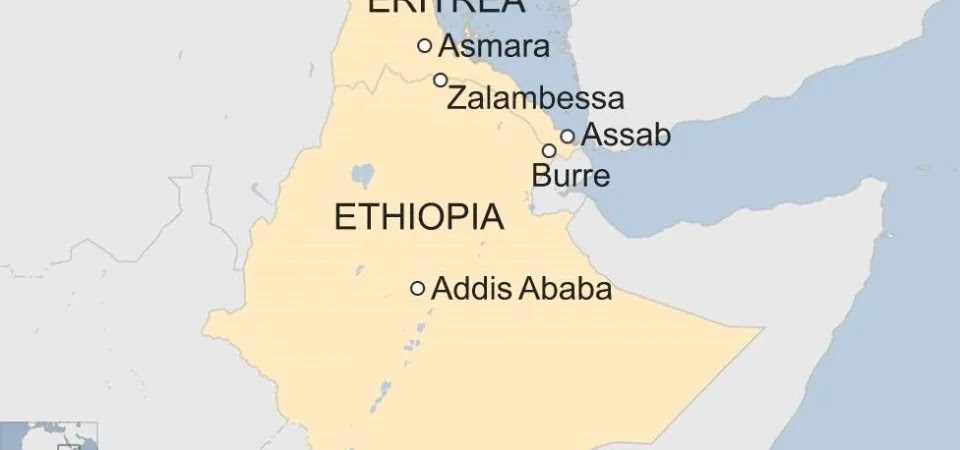
TPLF says its fighters clash with the Eritrean army


Rebel forces in the Tigray region say fighting has broken out again with neighbouring Eritrea.

The Tigrayan People’s Liberation Front (TPLF)’s spokesman Getachew Reda said on Twitter on May 31 that the Eritrean forces shelled the Tigray town of Sheraro on the 28th and 29th of May.He accused Eritrea of attempting to escalate tensions. Eritrea has not yet responded to the reports.Ethiopian government spokesperson Legesse Tulu told the BBC he had no information about the alleged fighting but said it could only be a provocation on the part of TPLF which would use to lay the blame on the Eritrean government.In addition to the clashes that took place in the past two days, Getachew said that the Eritrean 57th and 21st divisions had attacked the Tigray region and that the Tigrayan forces had thwarted the attack in the Adi Awalla area. “A brigade commander, three battalion commanders and more than 300 soldiers were killed and wounded. Many weapons and materiel was also captured,” he added.

In response, the government spokesperson Legesse Tulu, told the BBC that “we do not believe Eritrea could  launch the attack  at this time.”

The TPLF forces are preparing for war and might be planning a provocation in the area as a pretext for the war, he added.

SHARE THIS POST

Monday, May 30, 2022

Ethiopia set a world record for displacements in a single year: 5.1 million in 2021

Jacky Habib

People who fled from fighting in Ethiopia gather in a temporary internally displaced people camp to receive first bags of wheat from the World Food Programme. Ethiopia saw a record 5.1 million displacements in 2021.

Amanuel Sileshi / AFP via Getty Images

Conflict and violence triggered over 5.1 million displacements within Ethiopia in 2021 — triple the number reported there in 2020 and the highest figure recorded for any country in a given year, according to a new report from the Internal Displacement Monitoring Centre.

An internal “displacement” is defined as being forced to leave a place of residence but not crossing internationally recognized borders.

The cause of the staggering Ethiopian numbers: attacks against civilians, health facilities, and schools in Afar, Amhara, and Tigray which “triggered an unprecedented number of new and repeated displacements,” according to the report. So the number 5.1 million includes people who may have been displaced more than once.

The previous record was 3.5 million for Syria in 2013.

The report also indicates there are around 4.2 million internally displaced people (IDP) in Ethiopia.

The ongoing civil war in Ethiopia began in November 2020 as a power struggle in the country’s northern Tigray Region. The government and its allies, Eritrea and the Amharas, are fighting Tigray’s dominant political party, the Tigray People’s Liberation Front. All sides have committed atrocities in the conflict, which has involved mass killings and the use of sexual violence as a weapon of war.

A deep humanitarian crisis has resulted, and the U.N. has said the government has put in place a “de facto humanitarian blockade” preventing life-saving medicine and food from reaching rebel-held Tigray. Officials in Ethiopia have repeatedly denied blocking access to aid, but over the past eight months only a small amount of the needed-aid has made it into Tigray. Currently, 5.2 million people in Tigray need food aid. Approximately 400,000 are experiencing famine conditions.

Although the government declared a truce in March, a small fraction of much-needed aid — less than 10% by some estimates — has reached Tigray and the U.N. is still reporting that access constraints are delaying food distributions.

“It is not for a lack of resources or goodwill on the part of the international community. It is due to the Ethiopian government’s deliberate policy of starving TPLF and the people of Tigray,” says Awet Weldemichael, a professor at Queen’s University. “We have an entire region completely disconnected from the rest of the world — no basic services, financial, telecommunication, education, and otherwise.”

According to Weldemichael, “all the elements of the crisis are worsening.” He says the ongoing conflict along with a drought the likes of which hasn’t been seen in 40 years and worsening socio-economic challenges, may lead to even more conflict as people fight over limited natural resources.

To learn more about how the conflict has displaced people in Ethiopia, we spoke with Ivana Hajzmanova, the regional coordinator for the Middle East and Africa for the Internal Displacement Monitoring Centre. Her comments have been edited for length and clarity.

The war in northern Ethiopia has displaced millions of people at an unprecedented rapid scale. According to your data, 5.1 million displacements in a single year is a global record. Who’s most vulnerable and what are they facing?

This figure is very alarming and it shows how difficult the current situation is. Children are very much at risk. It was estimated that 1.7 million children lost access to education because they were in displacement. There were also widespread reports of human rights violations and abuses against different women, children and also members of different ethnic groups.

We are looking into the impact of displacement on disabled populations and disabled IDPs. We have observed that many settlements, evacuation centers, or IDP camps are not prepared to welcome disabled IDPs.

This war has unfolded during a global pandemic. What does your research show about the impact of COVID-19 on those who are displaced?

More than a half of those surveyed in displacement sites in Ethiopia report that they lost a job as a result of the pandemic, or they found it harder to find work because of the pandemic. In the same assessment, more than half of the IDPs said that they faced financial problems as a result of the pandemic, and they had to resort to reducing meals, borrowing money and also selling livestock — which is the main source of livelihood for many of them. The impacts of global inflation [due to the pandemic] is also impacting the ability of IDPs to buy food, which further impacts their food security.

Humanitarian organizations have called out the Ethiopian government for preventing them from accessing areas in Tigray. That makes it difficult to deliver aid — and even to assess the conditions that displaced people are facing.

There are certain parts of Ethiopia that are still inaccessible, especially in the region of Tigray. There are still areas which cannot be accessed by humanitarians and therefore they cannot be assessed. It’s very challenging, but despite this, our partners still manage to gather a lot of information on what’s happening in the country.

There are different ways of overcoming these challenges and it depends on the context and all the technological possibilities. It’s possible to use satellite images. This isn’t just a challenge in Ethiopia; we have seen similar constraints in other countries.

Can you explain how you use satellite images to help come up with the estimates in Ethiopia and other countries where you may have limited access?

Through satellite images, we get a better idea of what is happening and what is the scale of displacement. Satellite images mostly show the destruction of residential areas. Based on that, we can estimate how many people lost their homes and [people who] were displaced.

Can you explain how you come up with the estimates in Ethiopia and other countries included in the report?

It includes several assumptions.

For example, when you look at countries where we have multi-story buildings, we need to take into account how many stories this building might have and how many people could have lived there. We need to understand the average household size to have accurate estimations of displacement. We also need to understand what might be shopping centers or other types of public buildings in order not to overestimate displacement.

So do we know how much it costs to take care of the living needs of one displaced person in Ethiopia? The report shows a yearly range for health care, housing, education and other costs from $90 in Colombia to $710 in Syria.

The average economic impact per IDP in Ethiopiais about $390 — higher than the global average ($360) largely due to the severity of needs in Ethiopia, logistical challenges and access constraints.

This represents the cost of providing each IDP with support for their housing, education, health, and security for one year of displacement and accounting for their [immediate] loss of income. This does not represent the money actually spent on IDPs in 2021. It is an estimate of what funds would have been needed to meet their basic needs.

In March this year, the government of Ethiopia declared a unilateral truce in its conflict with Tigrayan forces. What impact has this had on displacement? Is there an indication of what we may see in the coming months?

I would say [we have seen] a slightly positive development, which was a truce between the warring parties in northern Ethiopia. At the same time, we also saw more displacement in [the state of] Oromia, the region of [the capital city of] Addis Ababa. There were also reports of violence and displacement in the past few weeks.

Toward the end of 2021 and the beginning of 2022, because the fighting in Ethiopia decreased, we saw a wave of returns. There were hundreds of thousands of IDPs who were returning to Tigray, Amhara and Afar. The main challenges they were facing were large destruction of their homes, public infrastructure, a lack of services and lack of access to education. There are many challenges, but we saw that many people tried to return as soon as they had the possibility to do so. This gives us an indication of what we can expect in the coming months should the truce hold and the fighting decrease in northern Ethiopia.

The report also touches on positive migration trends we saw in 2021. For example, India and Pakistan announced a ceasefire in the disputed region of Kashmir, and Bangladesh is implementing a national strategy to help resettle people displaced due to climate change. What’s the outlook in 2022?

The trends are very worrying globally. We were saying in this report that 5.1 million new displacements in Ethiopia is the highest figure ever recorded for any country in a given year. Now we know that Ukraine is now higher and it [continues to rise].

Despite the fact that these numbers are so high and the trends are very worrying, there are some good practices across the world, where governments are trying to respond to the displacement crises. They’re adopting different policies regarding durable solutions for displaced people. Even though the situation is concerning, there are still some lights in the darkness.

Jacky Habib is a freelance journalist based in Nairobi and Toronto. She reports on social justice, women’s rights, and global development. Follow her on Twitter @jackyhabib and read more of her work at www.jackyhabib.com.

Copyright 2022 NPR. To see more, visit https://www.npr.org.

Saturday, May 28, 2022

Report: Massacres of Ethnic Amharas in Ethiopia Continued Unabated in 2021


Amhara Association of America

Report: Massacres of Ethnic Amharas in Ethiopia Continued Unabated in 2021 

May 27, 2022 

WASHINGTON, D.C. – At least 3,308 ethnic Amhara civilians were killed in targeted massacres across Ethiopia between January 1st and December 31st of 2021, according to a new investigative report by the Amhara Association of America (AAA). More than 7,259 cases of human rights violations against Amharas, excluding millions of Amharas who have been displaced or whose property rights have been violated, are documented in the report. These include 3,308 killings; 1,252 injuries; 1,009 cases of rape; 111 arbitrary arrests; 62 cases of abduction and forced evictions that impacted at least 1,517 people.

Compiled through in-person and phone interviews of survivors, their relatives, and eyewitnesses, AAA’s annual report paints a grim picture of explicit and systemic human rights violations against the Amhara people. Articles and statements by Ethiopian human rights organizations and media outlets support AAA’s ground investigations.

  •   Rebel and armed groups fighting the Ethiopian government were responsible for majority of the civilian casualties (4,320 civilian casualties including 3,133 killed and 1,165 injured). Of these, militias of the Tigray People’s Liberation Front (TPLF) were responsible for 2,490 killings, the Oromo Liberation Army (OLA) was responsible for 1,688 of the casualties, Gumuz militiasfor 101, and Sheko militias for 19 causalities. In addition to the thousands of Amhara civilians killed and wounded in attacks by non-state actors and regional security forces, the report documents:

• Government forces were responsible for 86 of the civilian casualties: 37 by the Oromia Special Forces, 46 by the Amhara region security forces, two by ENDF, and one by Benishangul-Gumuz region security forces. Government forces were responsible for at least 111 arbitrary and unlawful arrest cases during the reporting period: the large majority (107) in the Oromia region and fourin the Amhara region.

• The Addis Ababa City Administration forcibly and violently evicted more than 1,517 ethnic Amhara residents from their homes in Addis Ababa in brazen disregard of the appropriate legal and procedural safeguards, including prior and adequate consultation, adequate notice, and the provision of compensation and/or alternative housing. 

• All documented rapes (1,009) were committed by TPLF militias in the Amhara region. • OLA accounted for all documented abduction cases (62) recorded in the Oromia (61) and Benishangul Gumuz regions (1).

The remaining casualties were attributed to the Sudan Defense Forces (13), local Oromo youth (3), and unidentified militias (160). • AAA estimates that at least five million Amharas were forced to flee their homes due to violence throughout 2021 amidst the COVID-19 threat The full report can be accessed here.

This annual report by no means asserts to be a comprehensive report on all atrocities committed against Amharas. Rather it is a compendium of AAA’s reports on selected areas that AAA was able to have access and investigate. AAA believes the actual atrocities committed against Amharas is much higher than documented in this annual report. As such, AAA will continue to lobby for an independent investigation of the genocidal acts committed against Amharas across all of Ethiopia. 

Targeted violence against Amhara civilians has been a reoccurring issue in Ethiopia over the past thirty years. However, under the current administration of Prime Minister Abiy Ahmed and his Prosperity Party, massacres against Amharas have increased in both frequency and recorded number of victims. AAA’s report identifies the OLA with support from Oromia regional security forces and government officials and TPLF as the main perpetrators of the massacres within the Oromia and Amhara regions, respectively.

 Additional killings were carried out by Gumuz militants and Amhara regional forces in Benishangul-Gumuz and Amhara region, respectively. Unfortunately, the Ethiopian Government has yet to acknowledge and comprehensively respond to the growing Amhara massacre crisis. In addition, domestic and international human rights organizations have not conducted comprehensive investigations into the massacres, leading to scant attention by international media or policymakers.  

AAA’s annual report comes in the wake of mass killings and arrests across the Amhara Region and Addis Ababa by Prime Minister Abiy and his government. The Amharas targeted in this crackdown include over 30 Amhara opposition political party members, at least 12 journalists, university lecturers, students, activists, ex-officials, and government employees critical of the Abiy regime. Amharas accuse the federal and regional governments of ignoring the violence, not ensuring the protection of Amhara civilians, and taking no steps to prosecute regional officials who have been implicated in many of the massacres. 

“As revealed in our report, genocidal acts of Amharas have become a frequent occurrence in Amhara, Oromia, and Benishangul-Gumuz regions. Amharas are under siege from both government security forces and armed groups. The continued atrocities and repression by both state and non-state actors cannot continue to be ignored.” said Tewodrose (Ted) Tirfe, Chairman of AAA. 

“Sadly, the Amhara people’s pleas to the international community have been ignored by human rights organizations and western governments. AAA is doing this documentation because no human rights organization in Ethiopia or abroad, is documenting and monitoring the systematic and recurrent violence against Amharas. The failure by the international actors to pay attention to Ethiopia’s human rights crisis and instability in a holistic manner including how the ethnic federalism system created the recurrent violence in the country will have long term repercussions” said Hone Mandefro, Advocacy Director for AAA.

AAA implores American policymakers, legislators, and international organizations to explicitly condemn the targeted massacres of Amhara civilians. AAA also calls upon human rights organizations, media outlets that report on Ethiopia, and the United Nations to conduct investigation of the massacres in order to hold the perpetrators accountable and bring justice to the victims. 

Media Contact: Tewodrose (Ted) Tirfe, Chairman, Amhara Association of America Tewodrose.Tirfe@amharaamerica.org 

Hone Mandefro, Advocacy Director, Amhara Association of America Hone.Mandefro@amharaamerica.org 

About AAA: The Amhara Association of America (AAA) is a nonprofit organization that represents the Ethiopian Amhara diaspora in the United States. Visit www.amharaamerica.org for more information.


https://www.facebook.com/EthiopToday

https://www.youtube.com/EthiopiaToday/videos

https://twitter.com/EthiopianToday

https://www.tiktok.com/@ethioptoday

https://ethiopian-today.blogspot.com

Related Posts Plugin for WordPress, Blogger...

Recent Articles

Recent Video Uploads

Subscribe Ethiopia Today Videos and Watch on You Tube

Ethiopia Today

  • Active a minute ago with many
  •  
  •  videos
Ethiopia Today bringing you recent information about Ethiopia. It bring you, news, Amharic movies,  Musics and many clips. subscribe and get many Videos on time